
Why Is My Knee So Swollen After Knee Replacement Surgery
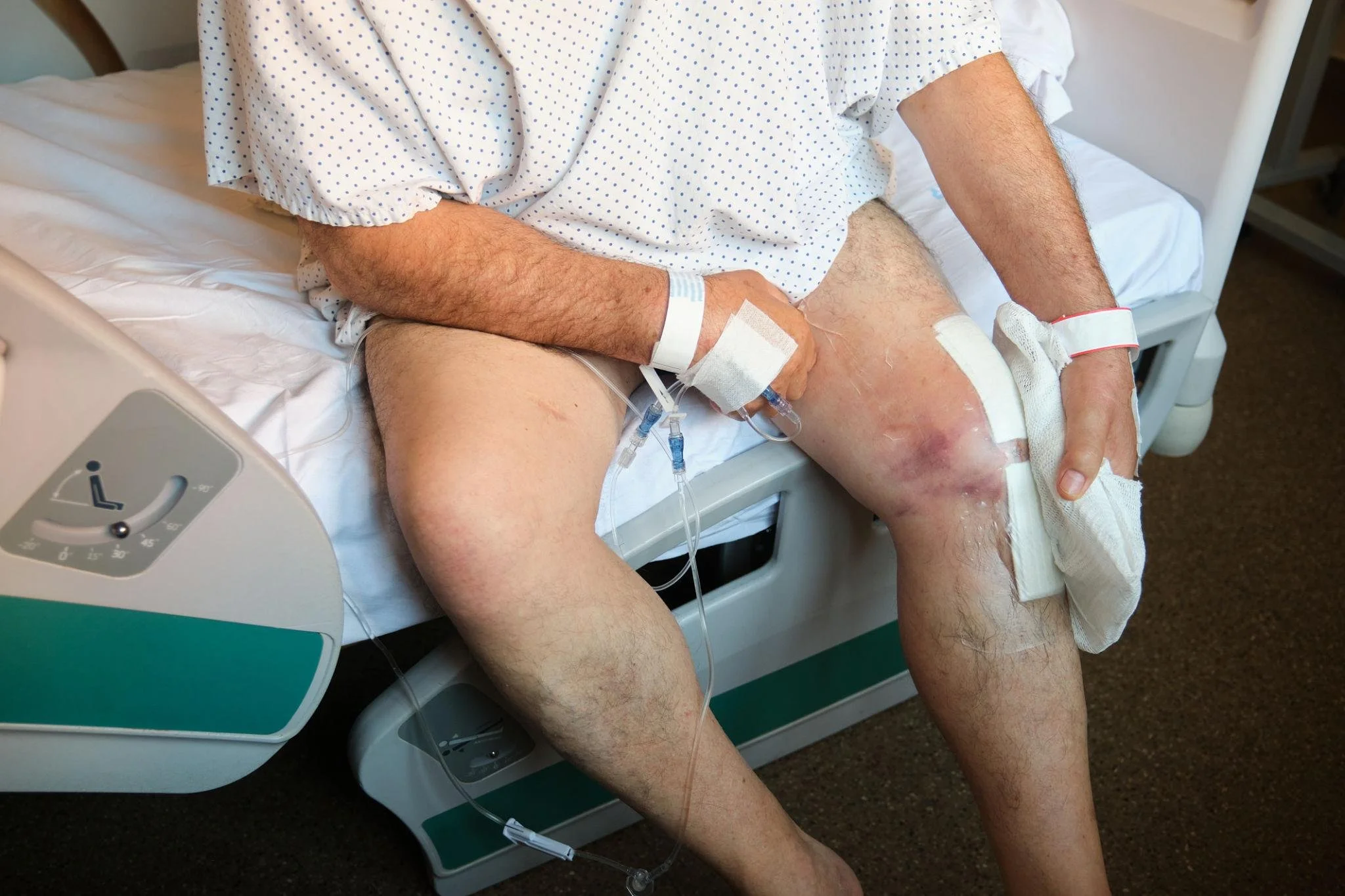
Why swelling happens, how long it lasts, and what you can do to reduce it
You've had your knee replacement surgery, you're doing your exercises, and you're looking forward to walking comfortably again. But there's one problem — your knee is still swollen, stiff and sometimes feels like a balloon ready to burst.
You might even be wondering:
Why is my knee still swollen weeks after surgery?
Is it normal for swelling to get worse after walking?
Why does my knee feel so tight when I try to bend it?
How long before my knee looks normal again?
Am I doing too much exercise?
At Bacchus Marsh Physiotherapy, we regularly help patients recover following total knee replacement surgery.
One of the most common concerns we hear is:
"I thought the swelling would have gone down by now."
The good news is that swelling is an expected part of knee replacement recovery. However, understanding why it occurs and how to manage it can make rehabilitation much easier.
1. Why Does Your Knee Swell After Knee Replacement?
A total knee replacement is major surgery.
During the operation, the surgeon removes damaged joint surfaces, prepares the ends of the thigh bone and shin bone, and inserts the artificial joint components.
Although the operation is designed to improve pain and mobility, it also creates significant tissue trauma.
Your body responds with inflammation as part of its natural healing process.
This causes:
Increased blood flow to the surgical area
Fluid accumulation around and inside the knee joint
Swelling of the surrounding muscles and soft tissues
Temporary changes in circulation and lymphatic drainage
Swelling is not necessarily a sign that something is wrong. It is often part of the normal healing process.
However, excessive swelling can interfere with rehabilitation.
2. How Long Does Swelling Last After Knee Replacement?
This is probably the most common question patients ask.
The answer is often longer than people expect.
First 2 Weeks
Swelling is generally quite significant during the early stages of recovery.
Your knee may feel hot, tight and uncomfortable. Bruising and swelling can extend down into the calf, ankle and foot.
Weeks 2–6
Swelling usually begins to improve gradually, although it can fluctuate considerably.
You might notice that your knee looks relatively good first thing in the morning but becomes much more swollen by the afternoon.
This is particularly common when you increase your walking and exercises.
Weeks 6–12
Swelling often continues to improve, but it is not unusual to experience swelling after prolonged walking, standing or physiotherapy exercises.
Many patients become frustrated during this period because they expect their knee to look normal.
3–6 Months
Some residual swelling can persist, particularly after more demanding activities.
Your knee may still feel warmer than the other knee.
6–12 Months
Mild residual swelling or warmth can occasionally persist for 12 months or longer as tissues continue to recover.
The important point is that swelling should generally show a gradual improving trend over time, even if there are occasional setbacks.
3. Why Does My Knee Feel So Tight When I Bend It?
One of the biggest problems with swelling is that it restricts knee movement.
Think of your knee joint like a balloon.
When extra fluid accumulates inside and around the joint, the tissues become stretched and tight.
When you try to bend your knee, this increased pressure can make movement uncomfortable.
Patients often describe:
"It feels like something is physically stopping my knee from bending."
Swelling can contribute to:
Reduced knee flexion (bending)
Difficulty straightening the knee
Pain during rehabilitation exercises
A feeling of pressure behind the knee
Difficulty walking normally
This is why managing swelling is an important part of restoring knee movement.
However, swelling is not the only possible cause of restricted movement. Pain, muscle guarding and postoperative stiffness can also contribute.
4. Swelling Can Switch Off Your Quadriceps Muscles
Something many patients don't realise is that knee swelling can interfere with muscle activation.
This is known as arthrogenic muscle inhibition.
When the knee joint becomes swollen, sensory signals from the joint can reduce the nervous system's ability to activate the quadriceps muscles effectively.
The quadriceps are the large muscles at the front of your thigh that help straighten your knee.
Even a relatively small amount of joint swelling can contribute to reduced quadriceps activation.
This can make it harder to:
Straighten your knee fully
Lift your leg onto the bed
Walk without limping
Climb stairs
Perform strengthening exercises
This explains why simply doing more strengthening exercises isn't always the answer.
Sometimes reducing swelling helps your muscles work more effectively.
5. Why Does My Knee Swell More After Walking or Exercise?
Many patients notice their knee becomes more swollen after walking, cycling or completing their rehabilitation exercises.
This doesn't automatically mean you've damaged your knee replacement.
During the early stages of recovery, the tissues are still healing and may not tolerate large amounts of activity.
Increasing your activity too quickly can temporarily aggravate swelling.
For example, you might feel comfortable walking for 10 minutes but notice significant swelling after walking for 30 minutes.
Your knee is telling you that the current amount of activity may be more than it can comfortably tolerate.
A Useful Rule
Pay attention to how your knee responds later in the day and the following morning.
If your knee becomes significantly more swollen, painful or stiff after exercise, consider reducing the amount or intensity of activity.
As your knee recovers, you can gradually increase your activity again.
The goal is not to avoid exercise.
The goal is to find the right balance between activity and recovery.
6. What Is the Best Way to Reduce Swelling After Knee Replacement?
There isn't one magic treatment that removes all swelling.
Instead, several strategies can help manage it.
Elevation
Elevating your leg can help reduce fluid accumulation.
When resting, try to position your leg so that your ankle is above the level of your heart, if comfortable and medically appropriate.
Support the leg without leaving a pillow permanently underneath the bent knee, as maintaining knee extension is important after surgery.
Ice Therapy
Applying a cold pack may help reduce pain and provide short-term relief from swelling.
Try 10–20 minutes at a time, with a protective towel between the cold pack and your skin.
Avoid applying ice directly to the skin, particularly if sensation around the knee is reduced.
Compression
Appropriate compression can help manage postoperative swelling.
Some patients benefit from compression stockings or an elastic compression bandage.
However, compression should be used according to your surgeon's recommendations, particularly if you have circulation problems or concerns about blood clots.
Gentle Movement
Regular gentle movement helps maintain circulation and prevent stiffness.
Useful exercises may include:
Ankle pumps
Gentle knee bending and straightening
Short, frequent walks
Quadriceps activation exercises
Stationary cycling when appropriate
Activity Modification
One of the most effective strategies is avoiding sudden increases in activity.
Instead of one long walk, several shorter walks throughout the day may be better tolerated.
Similarly, if your knee becomes very swollen after a rehabilitation session, you may need to temporarily reduce the intensity.
7. Should I Stop Exercising If My Knee Is Swollen?
Generally, no.
Exercise remains essential after knee replacement surgery.
Without appropriate movement and strengthening, patients risk developing persistent stiffness, muscle weakness and difficulty returning to normal activities.
However, exercise needs to be matched to your stage of recovery.
For example, if your knee is very swollen and struggling to bend, repeatedly forcing it into painful flexion may increase irritation.
A better approach may involve:
Managing swelling and discomfort.
Performing gentle range-of-motion exercises.
Maintaining quadriceps activation.
Gradually progressing strengthening.
Increasing walking and functional activities as tolerated.
At Bacchus Marsh Physiotherapy, we focus on adjusting rehabilitation according to how the knee responds, rather than simply increasing exercises every week.
8. When Should I Be Concerned About Swelling?
Although swelling is normal following knee replacement, certain symptoms require medical attention.
Seek urgent medical assessment if you develop:
Sudden or rapidly increasing swelling, particularly in the calf or leg
New calf pain or tenderness, especially with swelling
Increasing redness, warmth or pain around the wound, particularly with fever or discharge
A wound that begins leaking fluid or opens
Severe or unexplained deterioration in knee pain or function
These symptoms can indicate complications such as infection or deep vein thrombosis (DVT).
Sudden shortness of breath, chest pain, coughing blood or fainting requires emergency assistance. Call 000 in Australia.
Importantly, blood clots and infections can occur without every classic symptom. If your recovery changes unexpectedly, contact your surgeon or medical team promptly.
9. Why Is My Knee Still Swollen After 3 Months?
At three months, many patients are walking more comfortably, returning to everyday activities and noticing improvements in strength.
However, some swelling may remain.
This can be related to:
Ongoing soft tissue healing
Increased activity levels
Residual inflammation
Persistent quadriceps weakness
Reduced tolerance to prolonged standing or walking
For many patients, recovery continues well beyond the first three months.
Nevertheless, persistent substantial swelling, swelling that is worsening, or swelling accompanied by increasing pain should be assessed rather than automatically attributed to normal healing.
10. How Physiotherapy Can Help
At Bacchus Marsh Physiotherapy, we understand that recovering from knee replacement surgery involves much more than simply bending and straightening your knee.
Swelling management, muscle strength, walking mechanics and restoring confidence are all important parts of rehabilitation.
Your physiotherapy program may include:
Assessment of knee swelling and range of movement
Strategies to help manage postoperative swelling
Exercises to restore knee bending and straightening
Quadriceps strengthening
Walking and gait retraining
Balance and functional strengthening
Guidance on returning to walking, gardening, golf and other activities
With over 30 years of physiotherapy experience, we aim to provide practical advice, hands-on assessment and a rehabilitation program suited to your recovery.
Final Thoughts: Be Patient With Your Swollen Knee
Swelling after total knee replacement is common and can persist much longer than many patients expect.
For some people, noticeable swelling continues for several months, with mild residual swelling occasionally lasting up to a year or longer.
The key is to look for gradual improvement rather than expecting the swelling to disappear overnight.
Remember:
More exercise isn't always better. The right amount of exercise, combined with appropriate swelling management, is what helps your knee recover.
Need Help With Your Knee Replacement Recovery?
If you're struggling with swelling, stiffness, reduced knee movement or difficulty walking following total knee replacement surgery, physiotherapy may help.
At Bacchus Marsh Physiotherapy, we provide individualised rehabilitation to help you regain strength, movement and confidence after knee replacement.
Contact Bacchus Marsh Physiotherapy to arrange an appointment and discuss your recovery.
