
Frozen Shoulder
Physiotherapy for Frozen Shoulder (Adhesive Capsulitis)
Expert Shoulder Pain Treatment to Restore Movement & Reduce Stiffness
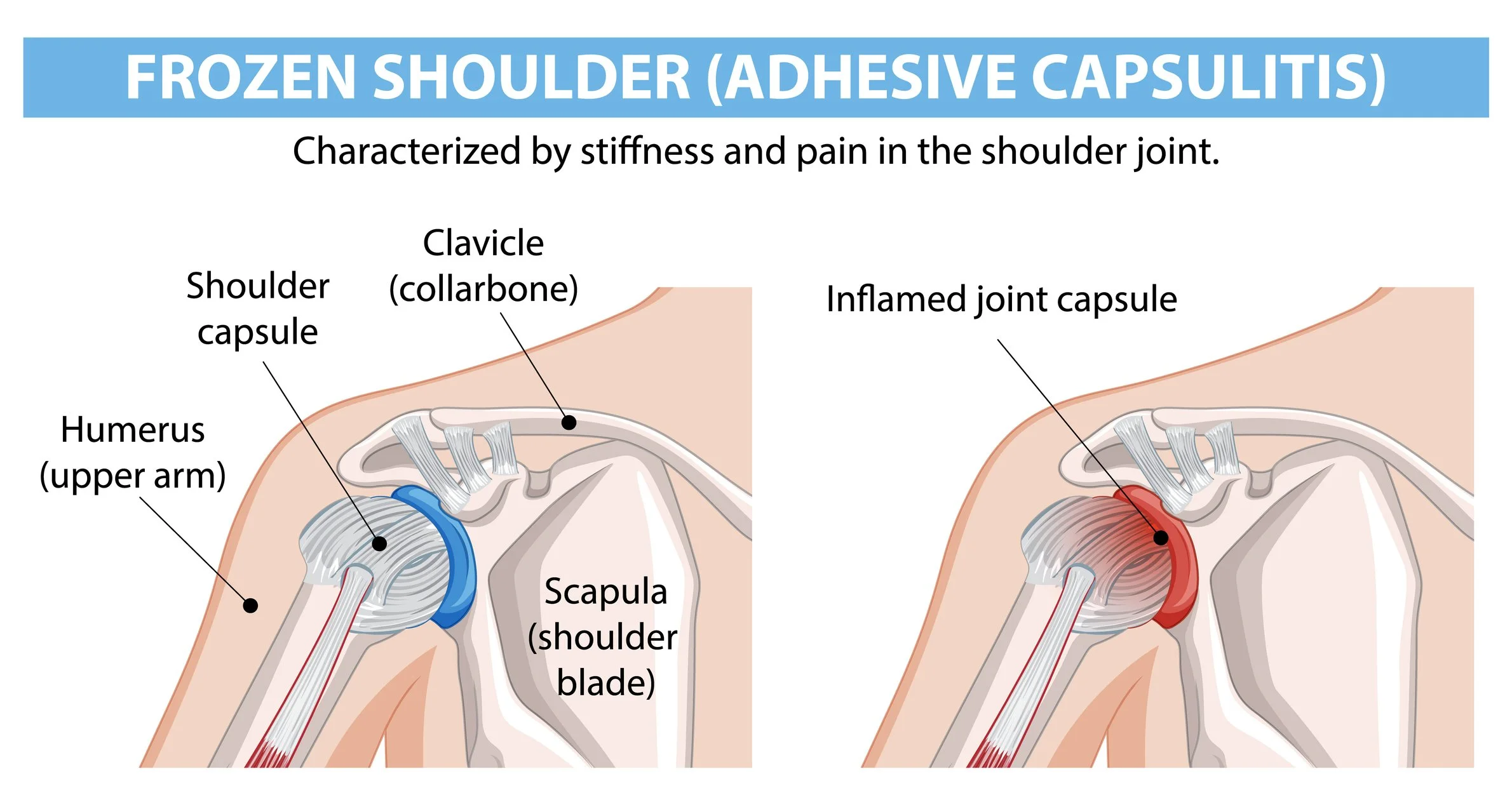
Frozen shoulder—also known as adhesive capsulitis—is a condition that causes significant shoulder stiffness, pain, and loss of movement. It often develops gradually, becomes extremely restrictive, and may last many months without proper care.
Our physiotherapy clinic provides evidence-based treatment for frozen shoulder, helping patients reduce pain, regain mobility, and return to normal activity.
If shoulder stiffness is affecting your sleep, daily tasks, work or sport, our experienced physiotherapists can guide you through each phase of recovery.
What Is Frozen Shoulder?
Frozen shoulder occurs when the shoulder joint capsule becomes inflamed, thickened, and tight, restricting movement in all directions. It is said it typically progresses through three stages as listed below. But we find that patients can be anywhere on the continuum. This means some people can initially present with extreme pain and limited motion others can have moderate pain but extremely stiff. Depending where you are on the continuum will guide how much we can mobilise your shoulder or whether you need a cortisone or hydrodilitation injection which can assist with recovery
1. Freezing Phase (Painful Stage)
Increasing pain, especially at night, and gradual loss of movement.
2. Frozen Phase (Stiff Stage)
Pain reduces but the shoulder becomes very stiff and limited.
3. Thawing Phase (Recovery Stage)
Movement begins to return slowly over months.
Understanding which stage you are in allows us to provide the right treatment at the right time.
Common Symptoms of Frozen Shoulder
Gradually increasing stiffness
Difficulty lifting the arm overhead
Pain sleeping on the affected shoulder
Severe restriction in rotation or reaching behind the back
Sharp pain with sudden movements
Increased difficulty with dressing, grooming, and daily tasks
Reduced strength due to lack of movement
Early treatment is important to prevent long-term stiffness.
Areas & Conditions We Treat
✔ Primary Frozen Shoulder (All Stages)
Painful, stiff, and recovery phases—each requiring different treatment strategies.
✔ Secondary Frozen Shoulder
Following:
Rotator cuff injury
Shoulder surgery
Arm fracture or immobilisation
Severe bursitis or tendonitis episodes
✔ Capsular Tightness & Restricted Movement
Especially loss of external rotation, overhead elevation, and hand-behind-back reach.
✔ Painful Shoulder Stiffness
Limiting sleep, work tasks, lifting, dressing, or reaching.
✔ Postural & Movement Issues Related to Shoulder Rigidity
Compensation patterns affecting the neck, upper back, and scapula.
How Physiotherapy Helps Frozen Shoulder
✔ Accurate Assessment & Phase-Based Treatment
We assess:
Which stage of frozen shoulder you are in
Range of motion limits
Capsular pattern restrictions
Muscle strength and compensations
Postural contributions
This ensures your treatment is safe, effective, and backed by the latest research.
✔ Pain Relief & Mobility in the Freezing Phase
During the painful stage we focus on reducing irritation while preserving movement:
Gentle joint mobilisation
Soft-tissue release
Heat therapy and pain management strategies
Education on safe movement
Guided mobility exercises (within tolerance)
Our priority is pain reduction without provoking the capsule further.
✔ Improving Flexibility & Range in the Frozen Phase
As pain eases, we progress to targeted mobility work:
Capsular stretching
Passive and active range-of-motion drills
Thoracic mobility
Scapular control exercises
Gradual home program progression
This phase often produces the biggest improvements in movement.
✔ Strength & Functional Restoration in the Thawing Phase
When range improves, we focus on:
Rotator cuff and deltoid strengthening
Scapular stability
Postural endurance
Functional movement retraining
Graded return to work, sport, and daily activities
This restores shoulder function and prevents recurrence.
Why Choose Our Physiotherapy Clinic for Frozen Shoulder?
Expertise in shoulder assessment and treatment
Evidence-based, phase-appropriate rehabilitation
One-on-one appointments with experienced physiotherapists
Clear exercise plans customised for your stage of recovery
Support for WorkCover, DVA, Medicare EPC and private patients
A calm, professional environment for long-term rehab
We are committed to helping you regain comfortable, confident shoulder movement.
Book Frozen Shoulder Treatment Today
Frozen shoulder can be slow and frustrating, but early physiotherapy can significantly improve your pain, mobility, and overall recovery.
If you’re ready to move your shoulder more freely and reduce stiffness, our team is here to help.
