
Sciatica & Nerve Pain
Effective Relief for Leg Pain, Disc-Related Nerve Compression & Lower Back Dysfunction
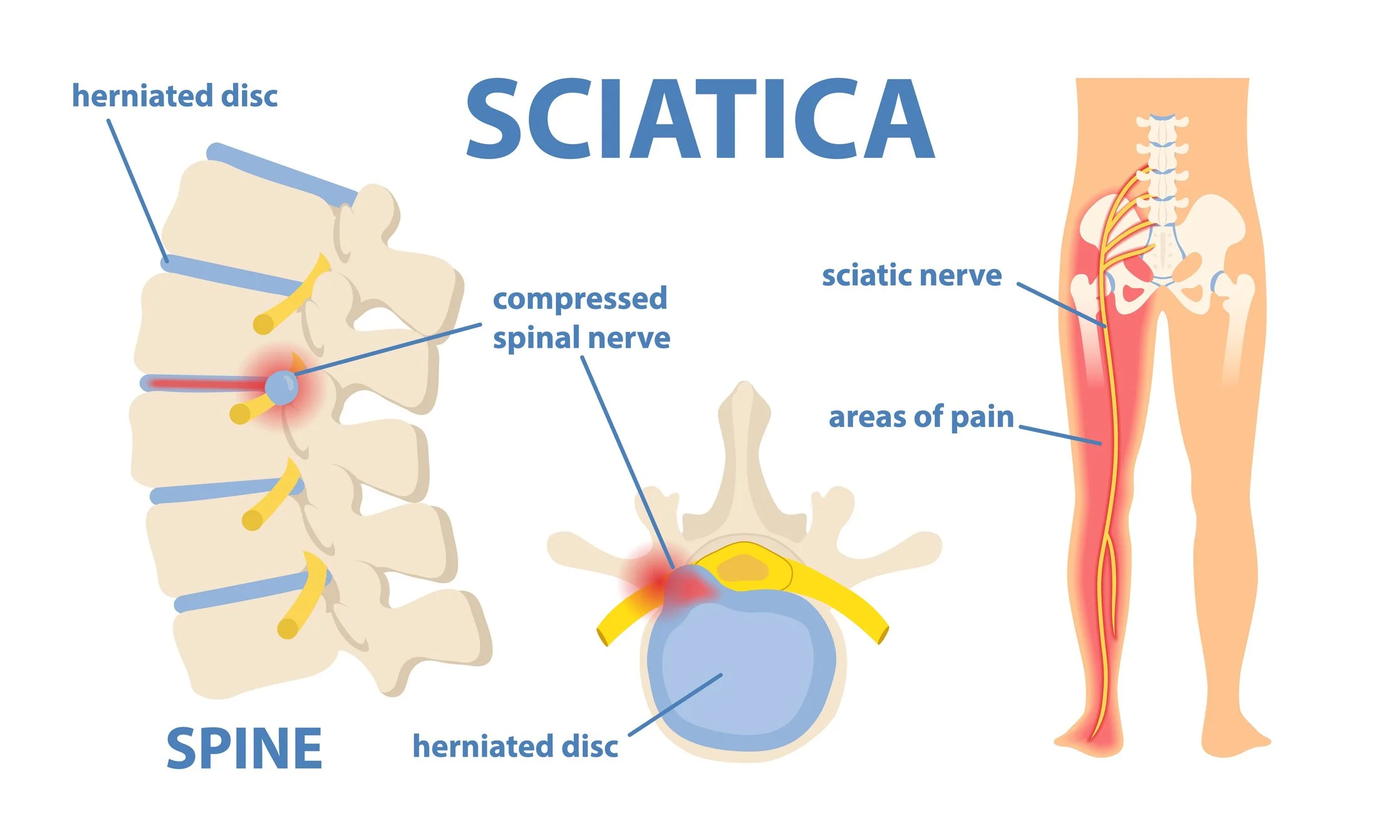
Sciatica and nerve pain often occur when a disc bulge or irritated spinal segment compresses or sensitises the nerve roots. This can create sharp, shooting or burning pain into the buttock, thigh, calf or foot. Our physiotherapists specialise in identifying whether your symptoms are disc-related and provide targeted treatment to address both the irritated nerve AND the underlying disc issue for long-term improvement and prevention.
Understanding Sciatica & Nerve Pain
Sciatica refers to pain caused by irritation, compression or inflammation of the sciatic nerve or lumbar nerve roots. Symptoms can include:
Sharp, burning or shooting leg pain
Tingling, pins and needles or numbness
Pain aggravated by sitting, bending, or lifting
Leg heaviness, weakness or fatigue
Lower back stiffness or restricted movement
A major cause of sciatica is a disc bulge, which presses on or inflames the nerve.
Areas We Treat for Sciatica & Nerve Pain
1. Treating the Disc Bulge – Addressing the Root Cause of Nerve Compression
Disc bulges often respond very well to specific physiotherapy techniques. We focus on:
Directional preference exercises (often extension-based) to reduce disc pressure
Restoring normal disc mechanics and load tolerance
Spinal decompression strategies through movement
Postural correction to minimise disc stress
Education on avoiding movements that worsen disc irritation
Restoring segmental stability so the disc does not repeatedly overload
By improving disc function, we reduce nerve irritation at its source and prevent future flare- ups.
2. Reducing Nerve Irritation & Calming Sensitivity
Techniques to soothe irritated nerves
Soft tissue release around lumbar and gluteal muscles
Gentle movement to improve blood flow to the nerve
Positioning advice for sleep, sitting and daily tasks
3. Restoring Spinal Mobility & Joint Function
Improving movement reduces pressure on the disc and nerve. Treatment includes:
Lumbar joint mobilisation
Thoracic mobility work
Hip flexibility programs
Tailored extension or flexion exercises
4. Nerve Mobility (Neurodynamics) & Sciatic Glides
To restore normal nerve movement:
Sciatic nerve gliding
Slump mobility progressions
Techniques based on irritability and symptoms
5. Core & Hip Strengthening for Long-Term Disc Support
Strengthening reduces load on the injured disc. Programs include:
Deep core activation
Glute strengthening
Hip stabiliser conditioning
Progressive load-based exercise
6. Posture & Movement Retraining
Correct mechanics prevent disc and nerve irritation:
Hip hinge technique for bending and lifting
Posture optimisation for sitting and standing
Ergonomic advice for work and home
7. Gait, Function & Return-to-Activity Programs
We ensure a safe, confident return to movement:
Walking and stride retraining
Work conditioning
Sport-specific progressions
Gradual load exposure to prevent re-injury
8. Chronic or Recurrent Sciatica Management
For long-standing issues:
Detailed biomechanical analysis
Long-term disc health strategies
Flare-up prevention coaching
Strength and mobility maintenance programs
Our Physiotherapy Approach
Your treatment is tailored to the underlying cause of your nerve pain, with a focus on:
Treating the disc bulge or segment causing compression
Restoring mobility and flexibility
Strengthening core and hip muscles
Reducing nerve sensitivity
Improving posture and movement patterns
Gradual return-to-activity planning
Flare-up management and long-term prevention
Our goal is not only to reduce nerve pain but to correct the source of the problem and prevent future flare-ups.
