
Osgood-Schlatter Disease: Why Rest Alone Is No Longer the Best Treatment
Osgood-Schlatter Disease (OSD) is one of the most common causes of knee pain in active children and teenagers. It typically affects adolescents between 10 and 15 years of age and is particularly common in sports involving running, jumping, sprinting and rapid changes of direction such as basketball, football, netball, soccer and athletics.
For many years, young athletes were told to simply rest and wait for the condition to settle. Recent research has challenged this approach and suggests that a combination of load management, education and progressive strengthening is often more effective than prolonged rest alone.
What Is Osgood-Schlatter Disease?
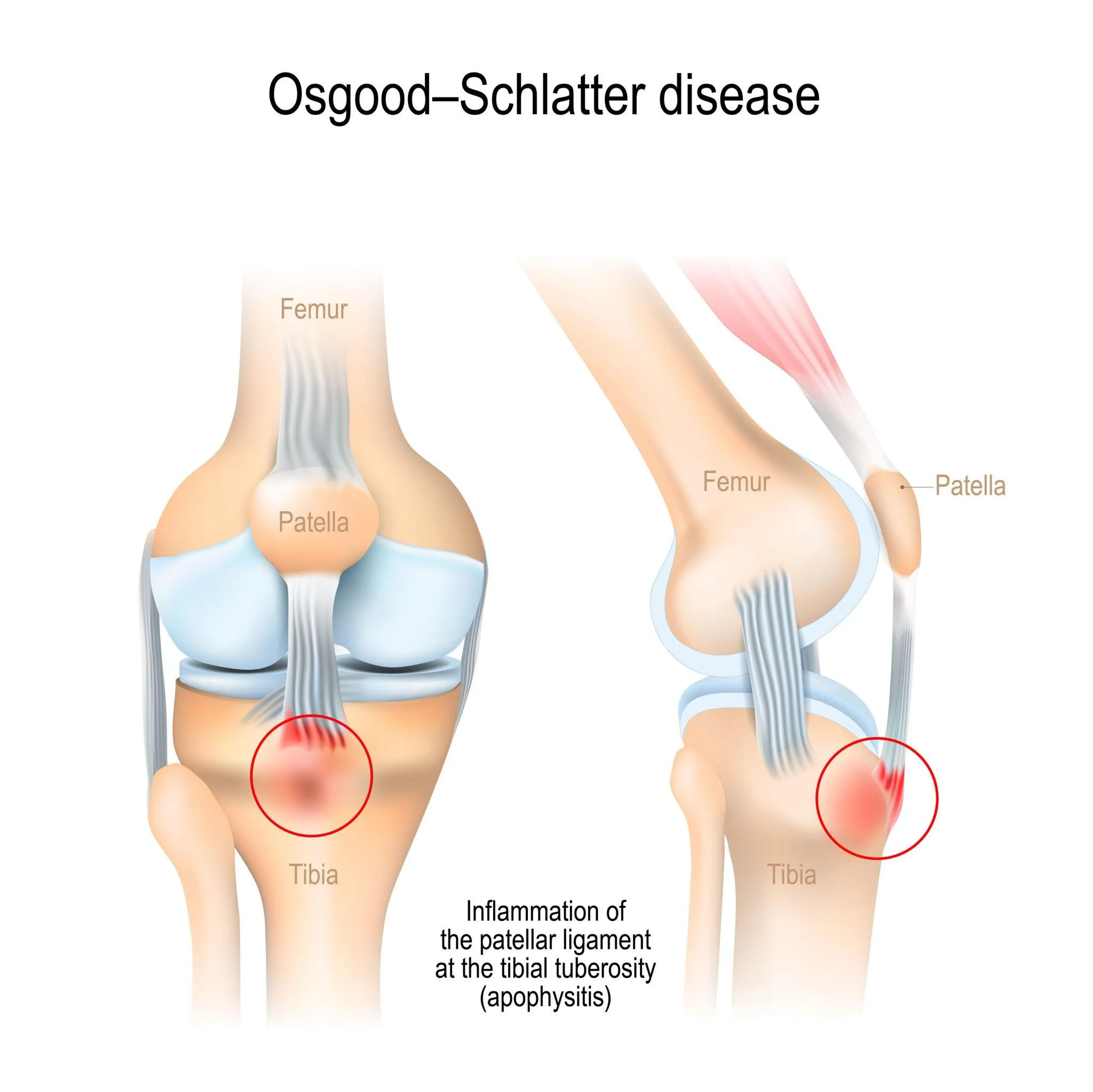
Osgood-Schlatter Disease is an irritation of the growth plate (tibial tubercle) where the patellar tendon attaches to the shin bone. During adolescence, growth plates are weaker than mature bone. Repeated traction from the quadriceps muscle and patellar tendon can irritate this area and cause pain, swelling and tenderness below the kneecap.
Common symptoms include:
Pain just below the kneecap
Tenderness over the tibial tubercle
Pain with running, jumping and squatting
Increased symptoms after sport
A noticeable bony lump below the knee
Why Do Growth Spurts Matter?
Many parents notice symptoms appear suddenly during a growth spurt.
During periods of rapid growth, bones lengthen faster than muscles and tendons can adapt. This increases tension through the patellar tendon and places greater stress on the growth plate. At the same time, many young athletes are increasing training loads, participating in representative teams and playing year-round sports.
The combination of rapid growth and increased sporting demands often explains why symptoms flare during adolescence.
Is Sport the Cause?
Sport itself is not the problem.
The issue is usually a mismatch between the loads being placed on the knee and the athlete's ability to tolerate those loads. Research consistently shows that high levels of jumping, sprinting and training volume are associated with symptoms. Athletes often experience flare-ups during periods of increased training, tournaments, preseason programs or rapid growth.

The Old Approach: Rest Until It Settles
Traditionally, many athletes were advised to stop sport completely until symptoms disappeared.
Unfortunately, this approach can lead to:
Loss of fitness
Reduced strength
Frustration and withdrawal from sport
Difficulty returning to previous performance levels
In some cases symptoms may persist for many months despite prolonged rest.
What Does Recent Research Show?
One of the most important studies published in recent years followed adolescents with Osgood-Schlatter Disease through a 12-week program involving:
Education
Activity modification
Pain monitoring
Progressive strengthening
Gradual return to sport
The results were encouraging.
After 12 weeks:
80% reported significant improvement
Strength and function improved
Jumping performance improved
At 12 months:
90% reported successful outcomes
Importantly, the program focused on managing load rather than completely stopping activity.
Why Strength Training Helps
The old belief that children should simply stretch and rest is being replaced by a more active rehabilitation approach.
Progressive strengthening helps by:
Improving the ability of muscles and tendons to absorb force
Reducing stress on the painful growth plate
Improving landing and jumping mechanics
Building resilience for future sporting demands
The strongest evidence currently supports progressive strengthening of the knee and hip musculature. Recent rehabilitation models also include calf strengthening and lower leg conditioning to improve overall load tolerance throughout the kinetic chain.
Examples may include:
Early Stage
Isometric quadriceps exercises
Wall sits
Glute bridges
Calf raises
Intermediate Stage
Squats
Split squats
Step-ups
Single-leg balance work
Advanced Stage
Single-leg squats
Hopping drills
Landing mechanics
Running and jumping progression
The key principle is gradual progression without provoking excessive pain.

What Is Load Modification?
Load modification does not mean complete rest.
Instead, it means adjusting training to keep symptoms manageable.
Examples include:
Reducing training frequency
Limiting jumping drills
Reducing sprint volume
Modifying practice duration
Temporarily reducing competition exposure
Many clinicians use a pain-monitoring model where mild discomfort during activity is acceptable provided symptoms settle within 24 hours and do not progressively worsen.
Can My Child Keep Playing Sport?
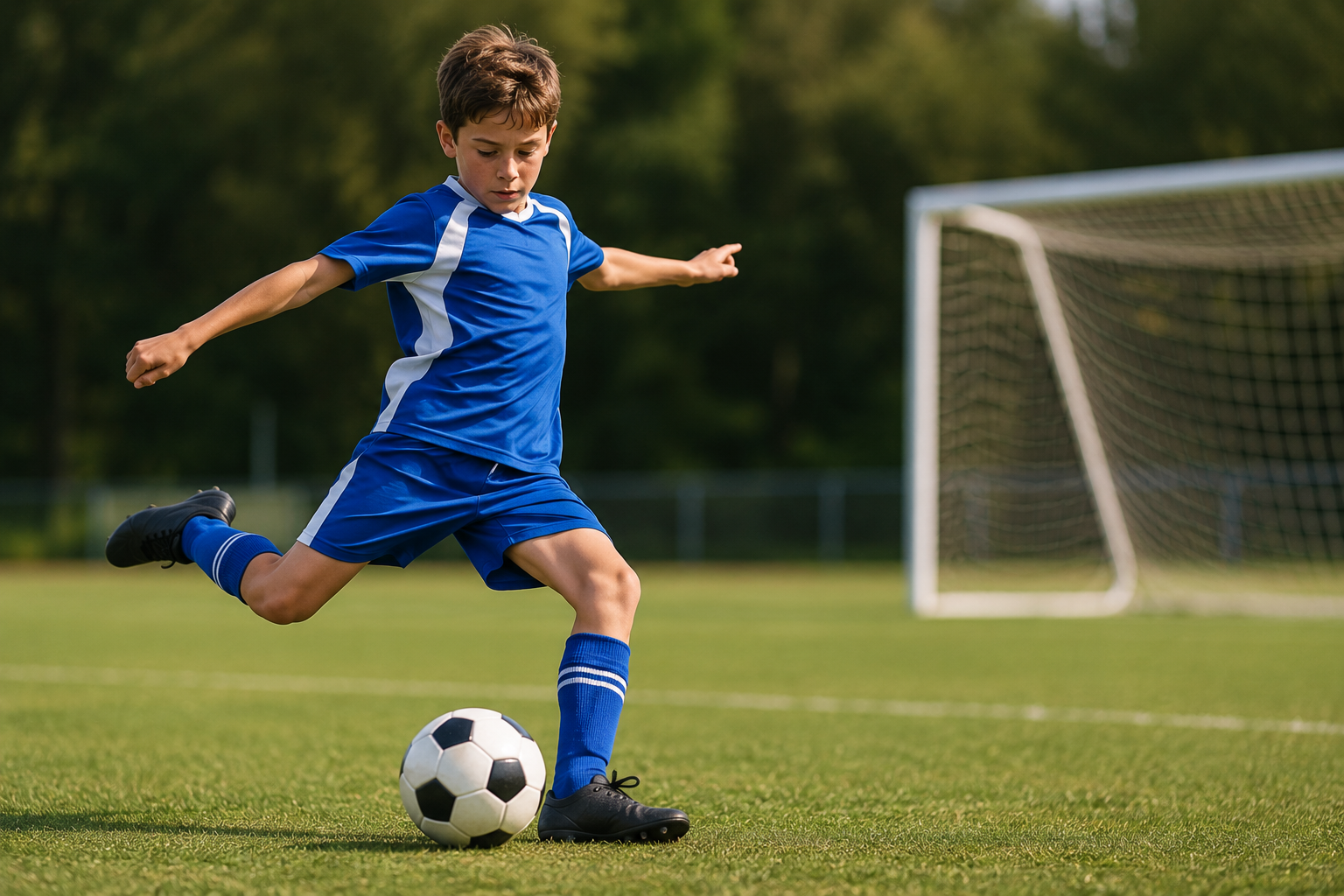
In many cases, yes.
Complete removal from sport is often unnecessary.
Athletes can frequently continue participating provided:
Pain remains manageable
Symptoms do not worsen significantly
Recovery occurs between sessions
Strength and rehabilitation exercises continue
This approach often helps maintain fitness, confidence and enjoyment while the condition settles.
How Long Does Recovery Take?
This is one of the most common questions from parents.
Unfortunately, Osgood-Schlatter Disease is rarely a quick fix.
Many athletes have symptoms for several months and some experience intermittent symptoms throughout their growth years.
Current research suggests:
Noticeable improvement often occurs within 8–12 weeks
Significant strength gains occur over 3–6 months
Return to unrestricted sport may take 3–12 months depending on severity
Symptoms often fluctuate during growth spurts
In the Rathleff study, only 16% had returned to full sport participation at 12 weeks, but this increased to approximately 69% by 12 months.
Return-to-Play Guidelines
Rather than relying on a specific timeline, return to sport should be based on function.
Athletes should demonstrate:
Minimal pain with daily activities
Full knee range of motion
Good squat and single-leg squat control
Ability to hop pain free
Ability to complete training sessions without symptom escalation
A gradual increase in training volume is usually more successful than jumping straight back into full competition.
Key Takeaways
Osgood-Schlatter Disease is a growth-related overuse injury commonly seen in active adolescents. Growth spurts and high sporting loads are major contributors to symptoms.
Current evidence no longer supports complete rest as the primary treatment. Instead, the best outcomes appear to come from:
Education
Load modification
Progressive strengthening
Gradual return to sport
Ongoing monitoring during growth spurts
With the right management, most young athletes can remain active while progressively reducing pain and improving performance.
