
Heel Pain Plantar Fascitis
Physiotherapy for Plantar Fasciitis/Fasciopathy
Plantar fasciitis (PF) is a common cause of heel and arch pain, often triggered by overuse, poor foot mechanics, or changes in activity, footwear or body weight. At our clinic, we treat the full range of PF-related issues, from early irritation to long-standing chronic pain, using evidence-informed physiotherapy to restore comfort, function and foot strength.
What is Plantar Fasciitis
The Plantar fascia is a thick band of tissue that runs across the bottom of the foot, from the heel bone (calcaneus) to the toes. It helps support the arch of the foot and absorbs impact when walking or running.
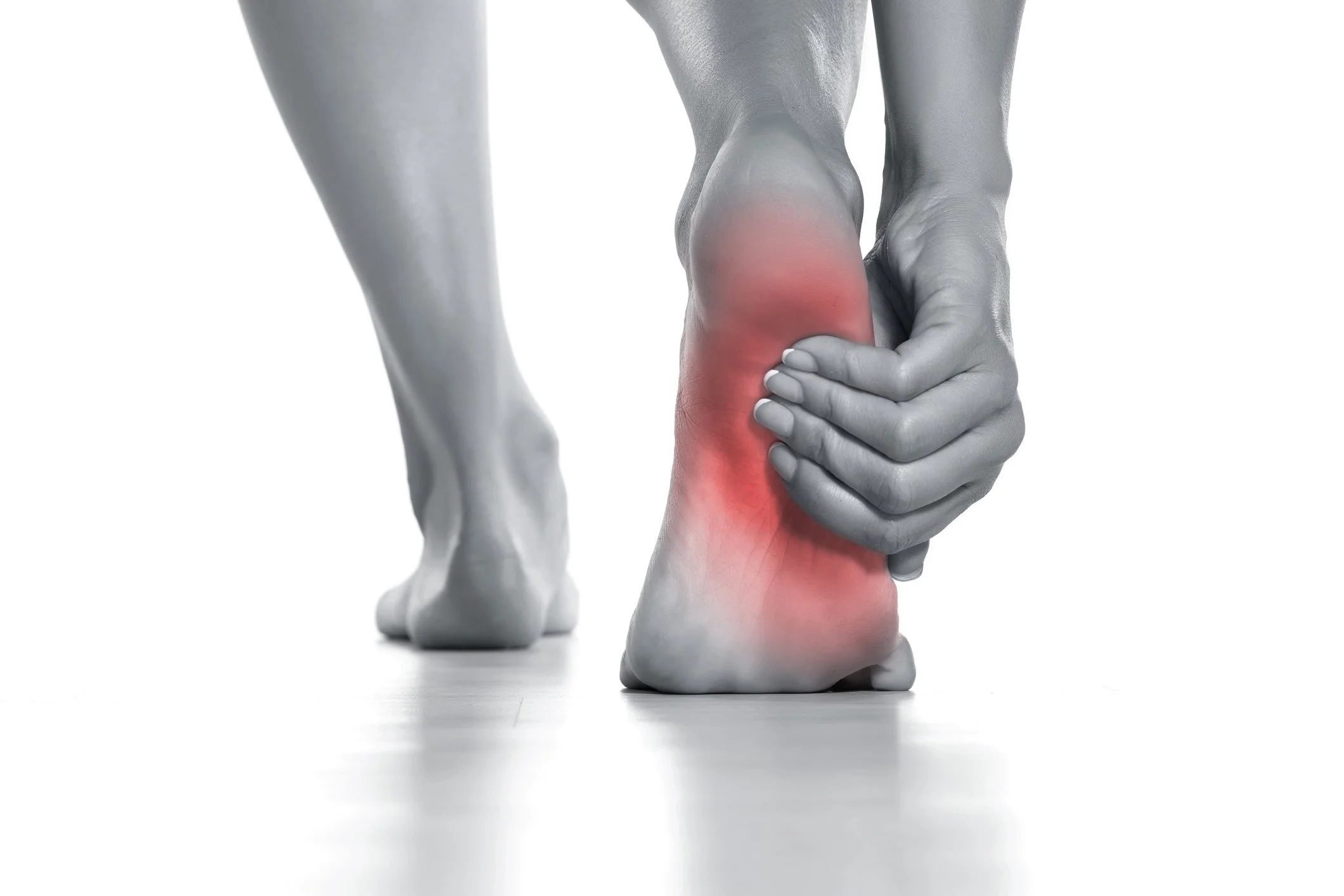
Plantar fasciitis occurs when this tissue becomes overloaded, damaged or irritated — often at its attachment to the heel bone — leading to pain under the heel or along the arch.
Pain is classically worst with the first steps in the morning or after long periods of rest, or after prolonged standing or walking.
What We Treat — Conditions & Contributing Factors
We commonly address:
Classic heel-attachment plantar fasciitis (pain at the heel/heel-bone interface)
Arch overload / fascia strain — when structural foot mechanics (flat feet, high arches) predispose to strain across the plantar fascia.
Biomechanical and loading contributors — tight or weak calf muscles / limited ankle dorsiflexion; poor footwear; sudden activity changes; excessive weight or prolonged standing.
Chronic or recurring plantar fascia issues — especially if simple home measures haven’t resolved the problem.
Foot, ankle or lower-limb muscle weakness or imbalance — including small foot-intrinsic muscles, calf, and other supporting muscles that influence foot arch and load distribution.
Footwear- and occupation-related stress — for people whose work or lifestyle involves prolonged standing, walking on hard surfaces, or use of unsupportive shoes.
Our Evidence-Based Treatment Approach
Our physiotherapy for PF typically includes some or all of:
Education & load management — identifying aggravating activities, adjusting training or standing patterns, and gradually reintroducing load as appropriate.
Stretching & soft-tissue work — including calf and Achilles stretches (to reduce tension) and plantar-fascia release or mobility work.
Strengthening exercises — aiming to strengthen calf muscles, foot-intrinsic muscles, and other lower-limb muscles to improve foot stability and arch support.
Taping or supportive techniques — e.g. Low-Dye taping, to temporarily offload the plantar fascia during healing or activity.
Footwear advice, orthotics or heel supports — recommending supportive shoes or inserts to improve load distribution and reduce stress on the fascia.
Gait and biomechanics assessment — examining your walking and load patterns, foot structure, ankle mobility and lower-limb alignment to identify and correct contributing factors.
What to Expect at Your First Appointment
A full assessment of foot structure, walking/gait, ankle and calf flexibility, and footwear/work habits
Identification of factors contributing to your plantar fascia pain (foot mechanics, load/stress, muscle strength, footwear)
A tailored treatment plan — often including initial stretching/taping/footwear adjustments, followed by progressive strengthening and mobility work
Ongoing monitoring and adjustments, with goal of reducing pain, restoring foot function, and preventing recurrence
Typical Recovery Timeline
With consistent physiotherapy — stretching, strengthening, support and load-management — many people experience gradual pain reduction over weeks to a few months. (PhysioWorks!)
Chronic or longstanding cases may take longer, sometimes up to 6 months, especially if contributing factors (foot mechanics, footwear, weight, activity patterns) are significant.
Why Choose Our Clinic
We deliver personalised, evidence-based physiotherapy for plantar fasciitis, addressing not just the pain but the underlying causes — foot mechanics, muscle strength, movement patterns and lifestyle factors. We guide you through rehab so you can return to walking, running and everyday life with stronger, pain-free feet.
Heel pain doesn’t fix itself — the right treatment does.
Book your Achilles assessment today and take the first step back to pain-free walking, running and training.
