
Bakers Cyst
Physiotherapy for Baker’s Cyst (Popliteal Cyst)
We provide targeted physiotherapy for Baker’s cysts to reduce swelling, improve knee mobility, treat the underlying cause, and help you return to normal activity without pain.
Effective Physiotherapy for Baker’s Cyst
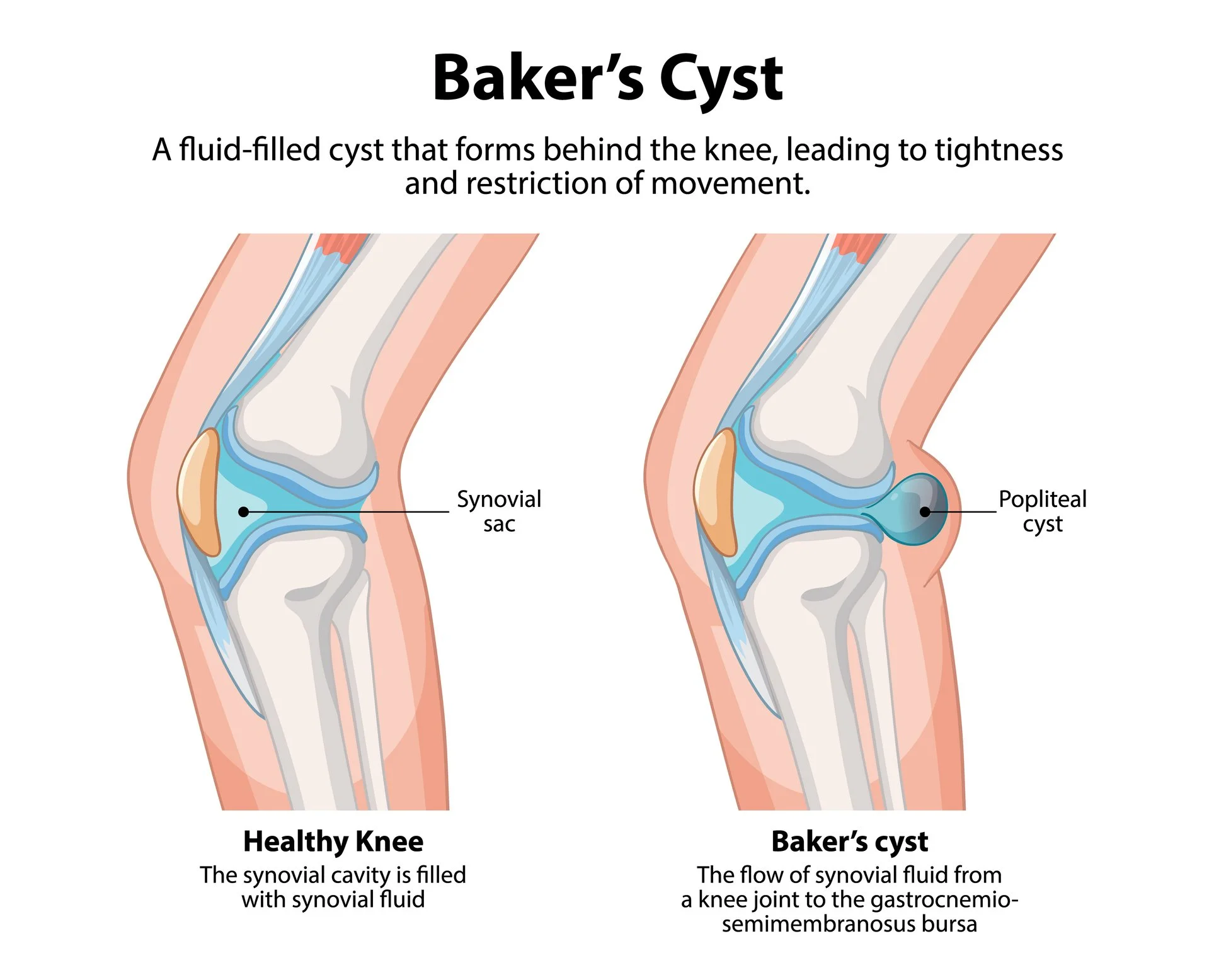
A Baker’s cyst—also known as a popliteal cyst—is a fluid-filled swelling at the back of the knee. It usually develops when there is irritation or inflammation inside the knee joint, causing excess fluid to collect in the popliteal space.
Rather than treating just the cyst itself, we focus on fixing the underlying knee issue—often arthritis, meniscal irritation, patellofemoral overload or swelling after injury. With the right physiotherapy, the swelling reduces, movement improves, and daily activities become more comfortable.
Common Symptoms of a Baker’s Cyst
A lump or swelling behind the knee
Tightness or pressure when bending or straightening the knee
Pain when walking, squatting or kneeling
Stiffness after rest or prolonged sitting
Calf tightness or referred discomfort
A feeling of fluid or fullness at the back of the knee
Areas We Treat
1. Reduce Knee Swelling & Inflammation
We address the excess joint fluid contributing to the cyst by focusing on:
Gentle joint mobilisations
Soft tissue release
Swelling management strategies
Ice, compression and elevation guidance
Taping to support knee mechanics
Reducing intra-articular swelling often leads to a significant reduction in cyst size.
2. Treat the Underlying Knee Cause
A Baker’s cyst is usually a symptom of another knee condition.
We assess and treat contributors such as:
Knee osteoarthritis
Meniscal irritation or degeneration
Patellofemoral overload
Post-injury swelling
Soft tissue imbalance
Biomechanical movement issues
Addressing the root cause is essential for long-term improvement.
3. Improve Knee Mobility & Movement
Stiffness around the knee joint increases pressure and discomfort.
We restore mobility through:
Knee flexion/extension mobility exercises
Patella mobility
Stretching tight quads, calves and hamstrings
Guided movement retraining
Better mobility reduces joint stress and supports healing.
4. Strengthening for Knee Stability
Strong muscles reduce joint compression and fluid build-up.
We focus on:
Quadriceps strength (especially VMO)
Hip/glute stability to reduce knee load
Hamstring and calf balance
Core and pelvic control
A stronger, more stable knee reduces recurrence of cysts.
5. Gait, Squat & Functional Movement Retraining
We correct patterns that overload the joint, including:
Poor knee control during squats/lunges
Overloading during walking or stairs
Hip drop or knee collapse
Compensation strategies from pain
Small technique adjustments create big improvements in comfort.
6. Load Management & Activity Guidance
We help you continue activity safely by adjusting:
Exercise volume
Training intensity
Squat depth and leg-day modifications
Walking, running or gym routines
Recovery strategies to minimise swelling
This allows you to stay active while managing symptoms.
Why Baker’s Cysts Occur
Baker’s cysts form when:
There is irritation inside the knee joint
Excess fluid escapes into the back of the knee
Mechanical stress increases due to weakness or overload
Arthritis or meniscal changes create persistent swelling
Physiotherapy reduces both the cyst and the underlying cause, preventing it from returning.
Get Relief From Baker’s Cyst Pain
If swelling behind your knee is stopping you from walking, bending or training comfortably, physiotherapy can help reduce symptoms, improve movement and treat the root cause.
Book your assessment today and start your recovery.
