
Patella (Knee Cap) Joint Pain
Physiotherapy for PFJ (Patellofemoral Joint) Kneecap Pain
Effective Treatment for PFJ Kneecap Pain
Patellofemoral pain—often called PFJ pain, runner’s knee or patella tracking dysfunction—is one of the most common knee conditions we treat. It typically develops from overload, poor movement control, muscle imbalance or increased knee compression during bending activities.
Whether your pain is triggered by running, stairs, kneeling, squatting, gym training or prolonged sitting, targeted physiotherapy can significantly improve your symptoms and restore normal knee function.
We create personalised treatment plans focusing on strength, stability, biomechanics and load management to give you long-lasting results.
Common Symptoms of PFJ Pain
Pain at the front of the knee or behind the kneecap
Discomfort with running, squats, stairs or hills
Pain after sitting for long periods (“theatre sign”)
Clicking, grinding or a feeling of pressure under the kneecap
Weakness during single-leg tasks
Difficulty kneeling or lunging
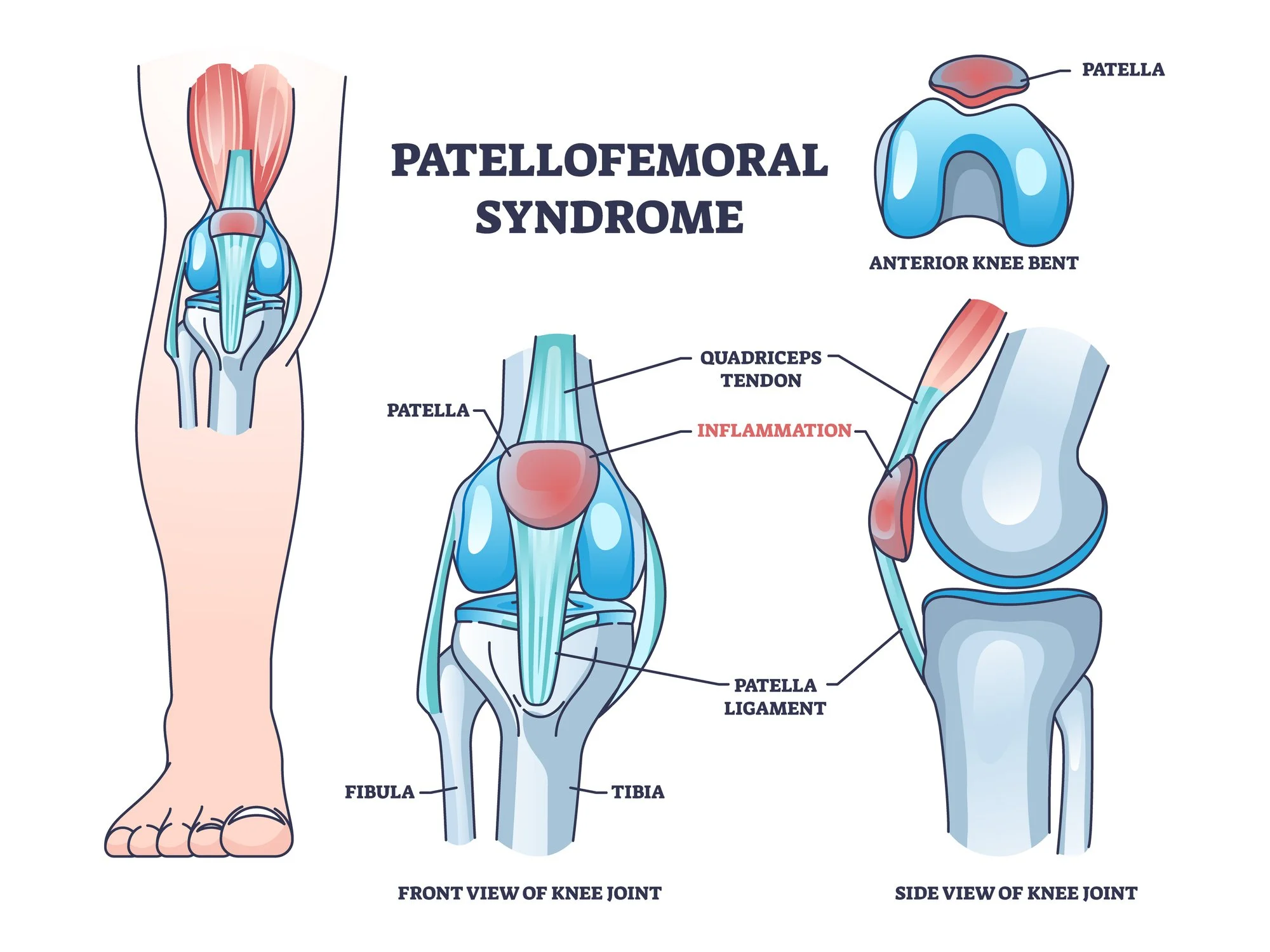
Expert physiotherapy for PFJ kneecap pain—helping you reduce pain, improve patella tracking, build knee strength, and return to running, stairs, squatting and sport with confidence.
Areas We Treat
1. Patella Tracking & Biomechanics
We assess how the kneecap moves during bending and loading tasks. Treatment includes:
Patella mobility techniques
Correcting knee valgus / hip collapse
Improving foot and hip mechanics
Technique coaching for squats, lunges and running
2. Strengthening for Long-Term Knee Health
PFJ pain improves dramatically with the right strengthening program. We focus on:
Quadriceps (especially VMO) activation
Glute medius and glute maximus strengthening
Calf and hamstring balance
Core and pelvic stability
This creates better alignment and reduces pressure under the patella.
3. Gait, Running & Movement Retraining
For active individuals and runners, we assess:
Stride pattern and cadence
Knee loading mechanics
Single-leg control
Hip and trunk alignment
We then progress you through a structured return-to-running or return-to-sport plan.
4. Load Management & Activity Modification
We help you stay active while reducing irritation by adjusting:
Training volume
Exercise selection
Intensity and frequency
Rest and recovery strategies
Small changes can drastically reduce pain.
5. Manual Therapy & Pain Reduction
To reduce short-term symptoms, we may use:
Soft tissue release
Joint mobilisation
Patella taping
Dry needling (if appropriate)
These techniques support your strengthening program.
Why PFJ Pain Happens
Patellofemoral pain rarely comes from “damage.” Instead, it is usually caused by:
Overuse or rapid increases in activity
Muscle weakness around the hip or knee
Poor knee tracking or alignment
Poor footwear or foot mechanics
Reduced tissue tolerance
The great news is that PFJ pain responds extremely well to the right rehabilitation plan, often without needing scans or invasive treatment.
Get Ahead of Kneecap Pain Today
If PFJ pain is stopping you from running, training or enjoying daily activities, our tailored physiotherapy programs can help you recover quickly and prevent future flare-ups.
Book your assessment today and take your first step toward pain-free, confident knee movement.
