
Pre-Season Footy & Shin Splints Understanding Medial Tibial Stress Syndrome (MTSS)
Pre-Season Footy & Shin Splints
Understanding Medial Tibial Stress Syndrome (MTSS)
Pre-season footy is exciting.
Fitness blocks ramp up.
Running loads increase.
Match simulation starts.
Intensity rises quickly.
And one of the most common complaint walks into the clinic:
“My shins are killing me.”
If you’re training for AFL or local league football, shin pain is one of the most frequent early-season injuries. This generally can occur with athletes who have taken an extended preseason break and have done no training or the player that has decided to get back into it after not playing for a few years.
Most of the time, it’s Medial Tibial Stress Syndrome (MTSS) — better known as shin splints.
What Is Medial Tibial Stress Syndrome?
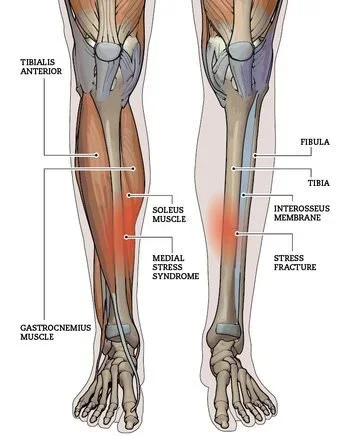
MTSS is irritation and overload along the inner border of the tibia (shin bone).
It develops when the bone and surrounding tissues cannot tolerate repetitive running stress.
In pre-season footy this often comes from:
Sudden increase in running volume
Hard grounds
Extra conditioning
Hill sprints
Boot changes
Poor recovery
What Does MTSS Feel Like?
Dull ache along the inside of the shin
Pain that warms up slightly
Soreness after sessions
Tenderness along the shin
If ignored, it can progress toward a stress reaction or stress fracture. A stress fracture is usually distinguished with more localised pinpoint tenderness on the tibia bone rather than diffuse spread out area of pain.
Early management is critical.
How Physiotherapy Helps Shin Splints
Many players assume they just need rest.
But good physiotherapy focuses on reducing symptoms while building tissue tolerance.
Here’s what can help:
1️⃣ Load Management Planning
The first step is not complete shutdown.
It’s adjusting load intelligently.
This may involve:
Reducing sprint volume
Removing back-to-back high intensity days
Modifying conditioning temporarily
Cross-training (bike, pool) to maintain fitness
The goal is to calm symptoms while keeping you progressing.
2️⃣ Hands-On Treatment for Symptom Relief
While manual therapy doesn’t “fix” the bone stress, it can help reduce secondary muscle overload.
Helpful techniques may include:
Soft tissue release of calf muscles
Soleus and posterior tibial muscle work
Ankle joint mobilisation
Dry needling (if appropriate)
This can reduce muscle tension contributing to tibial strain and improve comfort during rehab.
3️⃣ Progressive Strength Rehabilitation
This is the cornerstone of treatment.
Key focus areas:
✔ Soleus Strength
Bent-knee calf raises are critical.
✔ Gastrocnemius Strength
Straight-leg calf raises with progressive load.
✔ Tibialis Posterior Strength
Foot control and arch support exercises.
✔ Hip & Glute Strength
Improving proximal control reduces lower leg load.
Loading must be progressive — not rushed.
4️⃣ Running Technique & Biomechanical Review
Small adjustments can reduce tibial stress:
Slight increase in cadence
Avoiding over-striding
Improving ankle mobility
Assessing footwear
These changes can significantly reduce recurrence risk.
5️⃣ Gradual Return-To-Run Program
Returning to full footy intensity requires staged progression:
Controlled running
Tempo efforts
Acceleration drills
Change of direction
Full training
Competition
Skipping stages is where setbacks happen.
When To Seek Assessment
You should get it checked if:
Pain is worsening week to week
You can’t hop without pain
Pain is sharp or localised
It isn’t settling with load modification
Early physiotherapy often prevents long lay-offs.
The Big Takeaway
Shin splints in pre-season are common — but not inevitable.
They’re usually a sign that:
Running load has exceeded current tissue capacity.
With proper load management, strength building, and staged return to training, most players can continue pre-season without losing significant time.
Ignore it, and it may cost you half your season.
Manage it early, and you stay ahead.
If your shins are flaring up during pre-season, a structured physiotherapy plan can help settle symptoms and build resilience — so you’re ready when round one arrives.
