
Is Getting a MRI for Back Pain Harmful?
Short answer: having a lumbar MRI does not cause worse health outcomes — but getting one when it isn’t clinically necessary is associated with worse outcomes for many people.
That distinction matters.
What the research consistently shows
Large, high-quality studies have found that early or unnecessary lumbar MRI (especially within the first 6 weeks of back pain, without red flags) is linked with:
Higher likelihood of ongoing pain
More medical interventions (injections, surgery, specialist visits)
Greater disability and time off work
Higher healthcare costs
No better long-term pain or function outcomes
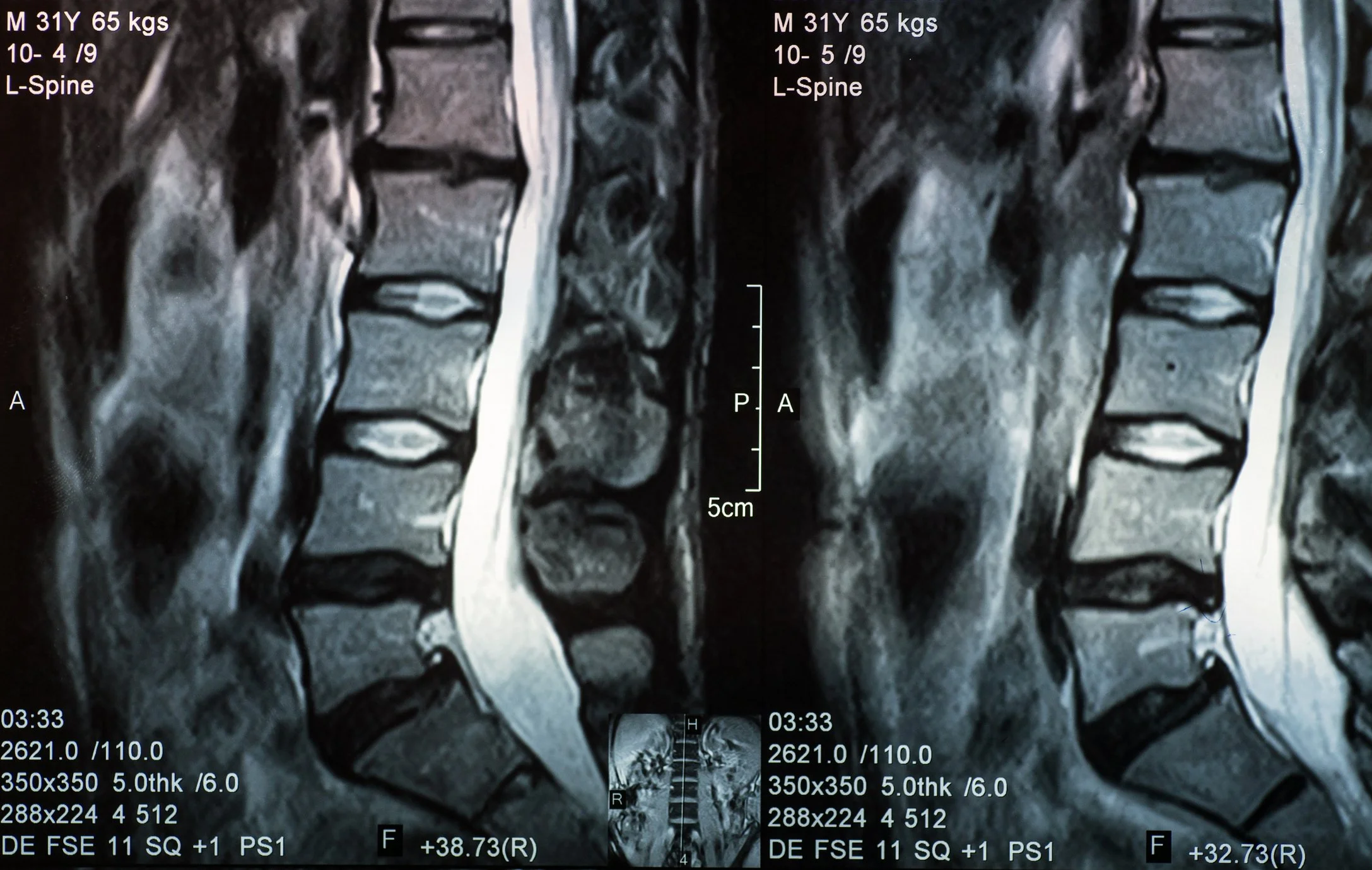
In other words:
📸 More imaging does not mean better recovery
Why can MRI be linked to worse outcomes?
1. Normal age-related changes get medicalised
Most people over 30–40 will show things like:
Disc bulges
Disc degeneration
Facet joint arthritis
Annular tears
These findings are extremely common in people with NO pain.
When patients see these words on a report, they may:
Believe their spine is “damaged”
Become fearful of movement
Avoid activity
Expect surgery or passive treatment
👉 Fear and avoidance are powerful drivers of persistent pain.
2. MRI findings don’t predict pain or recovery
The severity of MRI changes does not correlate well with pain
People with “bad-looking” scans often do very well
People with “normal” scans can have severe pain
Pain is influenced by:
Load tolerance
Nervous system sensitivity
Beliefs and expectations
Stress, sleep, activity levels
MRI doesn’t measure any of this.
3. Imaging increases the risk of overtreatment
Studies show people who get early MRIs are:
More likely to be referred to surgeons
More likely to receive injections or surgery
Not more likely to have better outcomes
This is known as the imaging cascade.
When an MRI is appropriate (important)
Lumbar MRI is very useful and appropriate when there are red flags, such as:
Progressive neurological weakness
Suspected cauda equina symptoms
Significant trauma
Infection, fracture, cancer suspicion
Severe, persistent nerve pain not improving after appropriate care
In these cases, MRI improves outcomes by guiding necessary treatment.
So does an MRI harm you?
No — the scan itself does not harm you.
But how the information is interpreted and communicated can absolutely influence:
Your pain experience
Your confidence in movement
Your recovery trajectory
That’s where outcomes can worsen.
Practical takeaway
✔ MRI is a tool, not a diagnosis
✔ Most back pain improves with time and active management
✔ Imaging should support clinical reasoning — not replace it
✔ Understanding your scan properly matters more than the scan itself
Back pain doesn’t always need scans — it needs the right care. Book an appointment with Bacchus Marsh Physiotherapy today.
