Total Knee Replacement Physiotherapy in Bacchus Marsh
Individual rehabilitation before and after knee replacement surgery — helping you restore movement, strength, walking and confidence.
30 years of physiotherapy experience | Individual rehabilitation | Bacchus Marsh
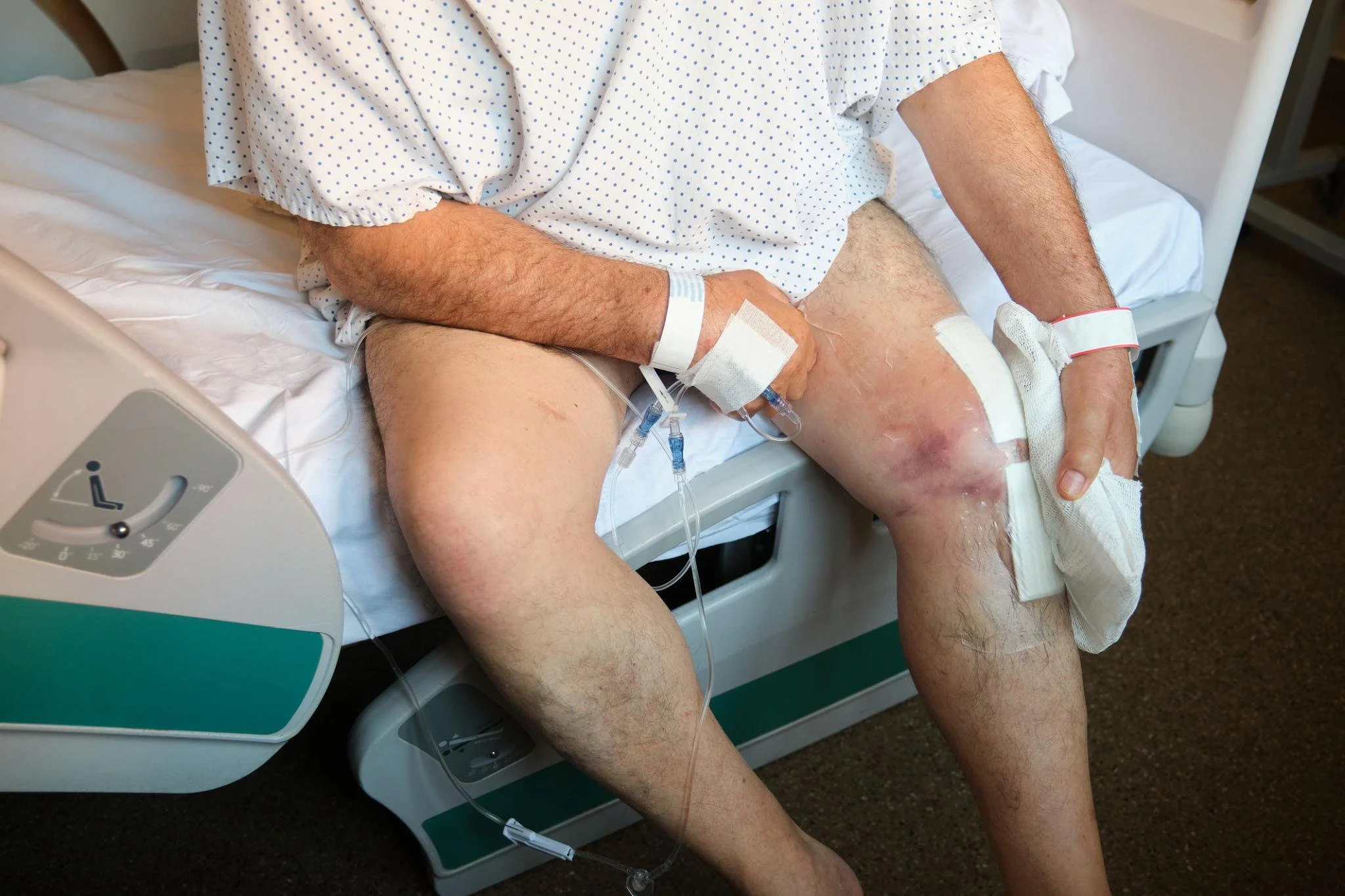
Recovering From a Knee Replacement?
Knee replacement recovery can be challenging. Pain, swelling, stiffness, weakness and uncertainty about whether your recovery is progressing normally are common concerns.
At Bacchus Marsh Physiotherapy, we provide structured rehabilitation based on your stage of recovery, your progress and the activities you want to return to.
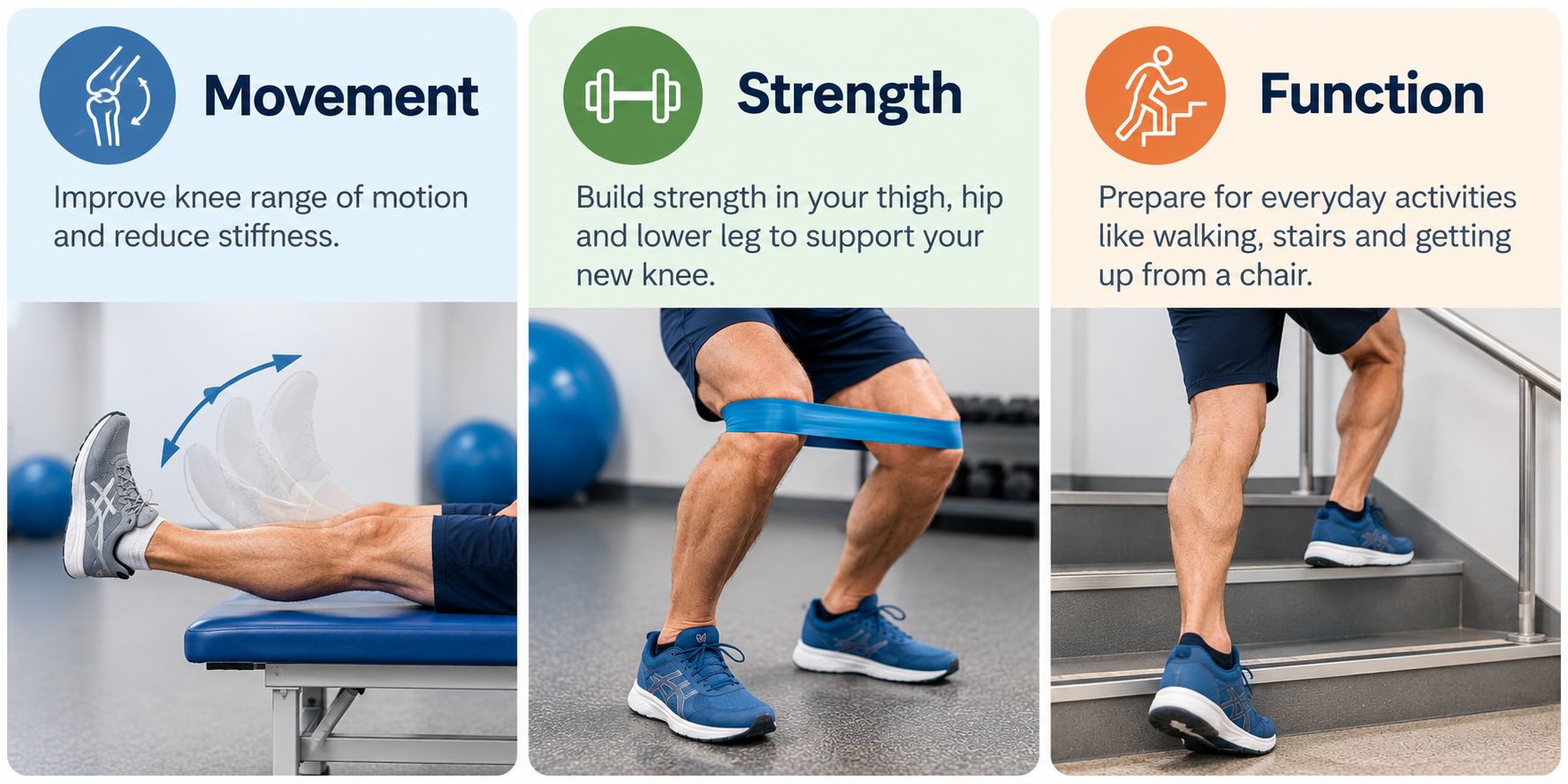
Movement
Restore knee bending and straightening.
Strength
Rebuild quadriceps and leg strength.
Function
Improve walking, stairs and everyday activities.
More Than a Sheet of Exercises
Knee replacement rehabilitation shouldn't be the same program repeated week after week.
We regularly assess your movement, swelling, strength, walking and function and progress your rehabilitation as your knee improves.
We also help you understand what to expect during recovery, when to progress exercise and when symptoms may warrant further medical review.
Your recovery pathway
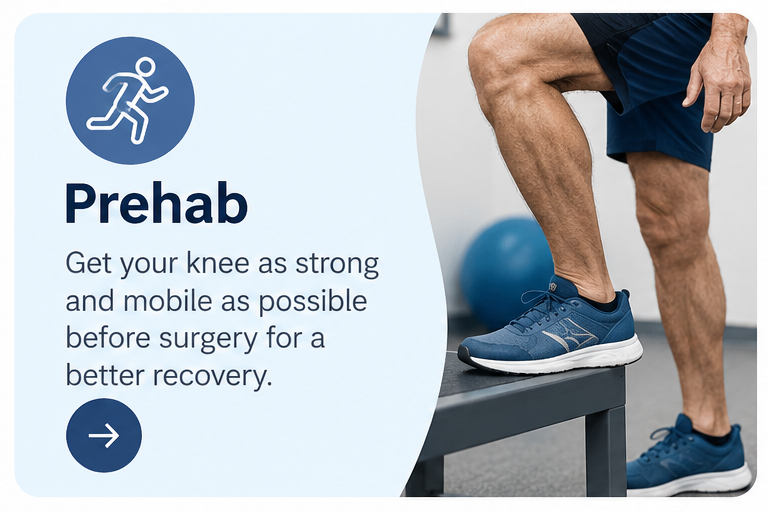
BEFORE SURGERY
Prepare your knee and body for surgery with strengthening, movement, exercise and education.
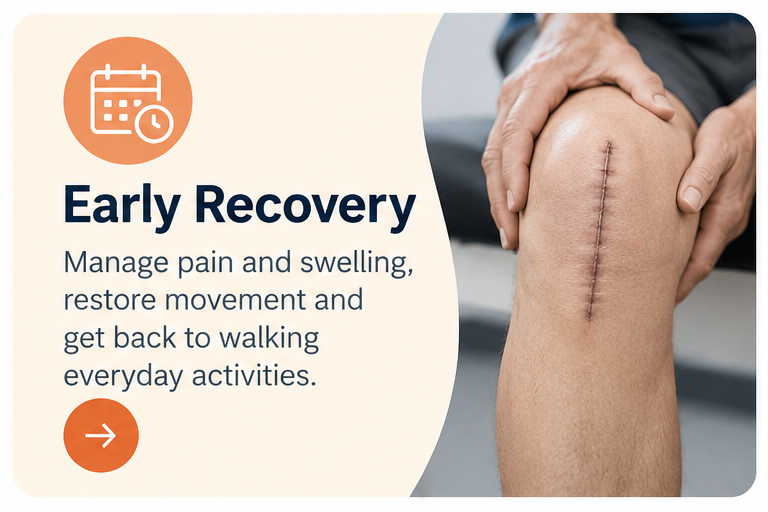
0–6 WEEKS
Manage swelling, restore movement, activate your quadriceps and improve walking.
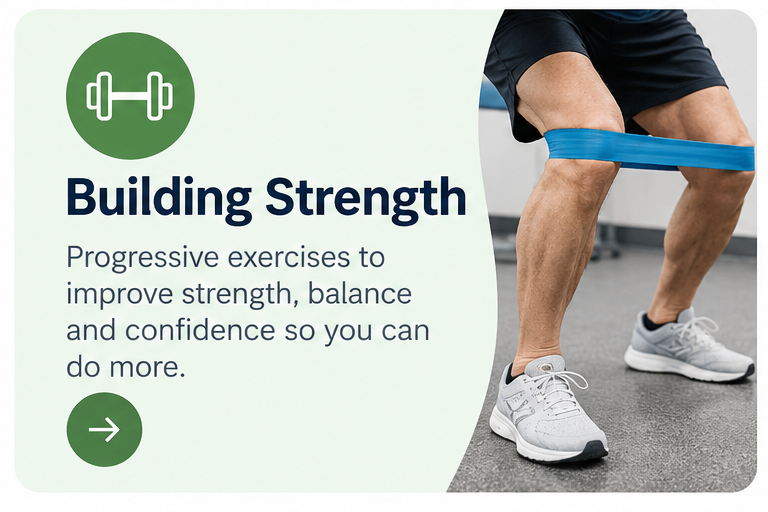
6–12 WEEKS
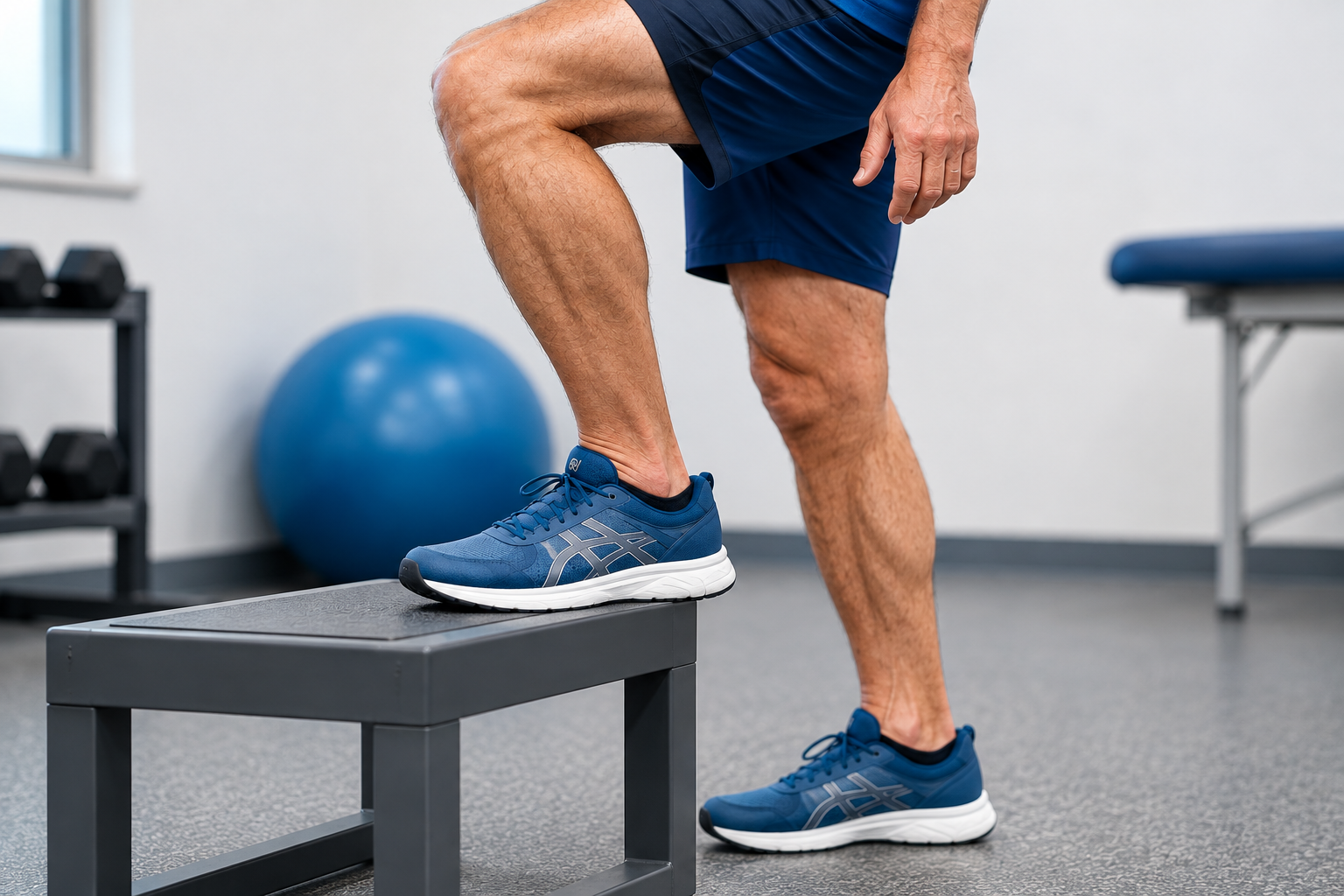
Progress strengthening, stairs, balance, walking and functional exercise.
3+ MONTHS
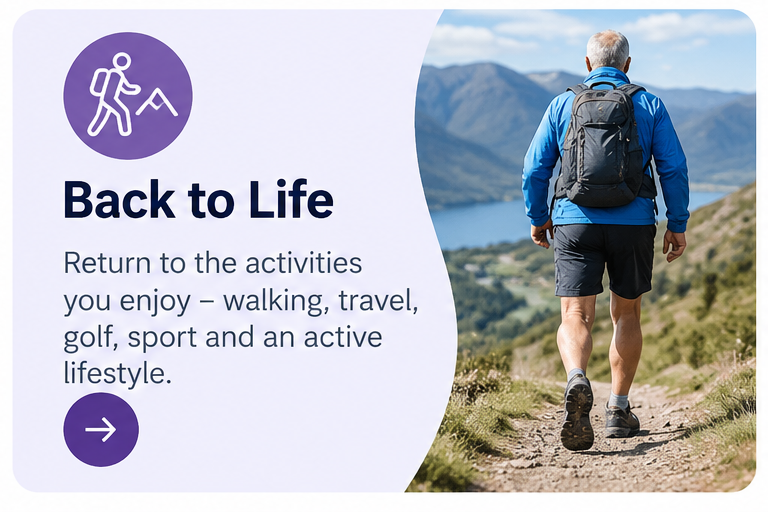
Build strength and confidence for walking, gardening, golf, cycling, gym and other activities.
Experienced Physiotherapy Care in Bacchus Marsh
Martin Spitzeck is the principal physiotherapist at Bacchus Marsh Physiotherapy and has 30 years of physiotherapy experience.
Martin has a special interest in rehabilitation, strengthening and helping people regain function following injury and orthopaedic surgery.
His approach combines hands-on physiotherapy where appropriate with progressive exercise, education and practical strategies to help patients become confident managing their recovery.
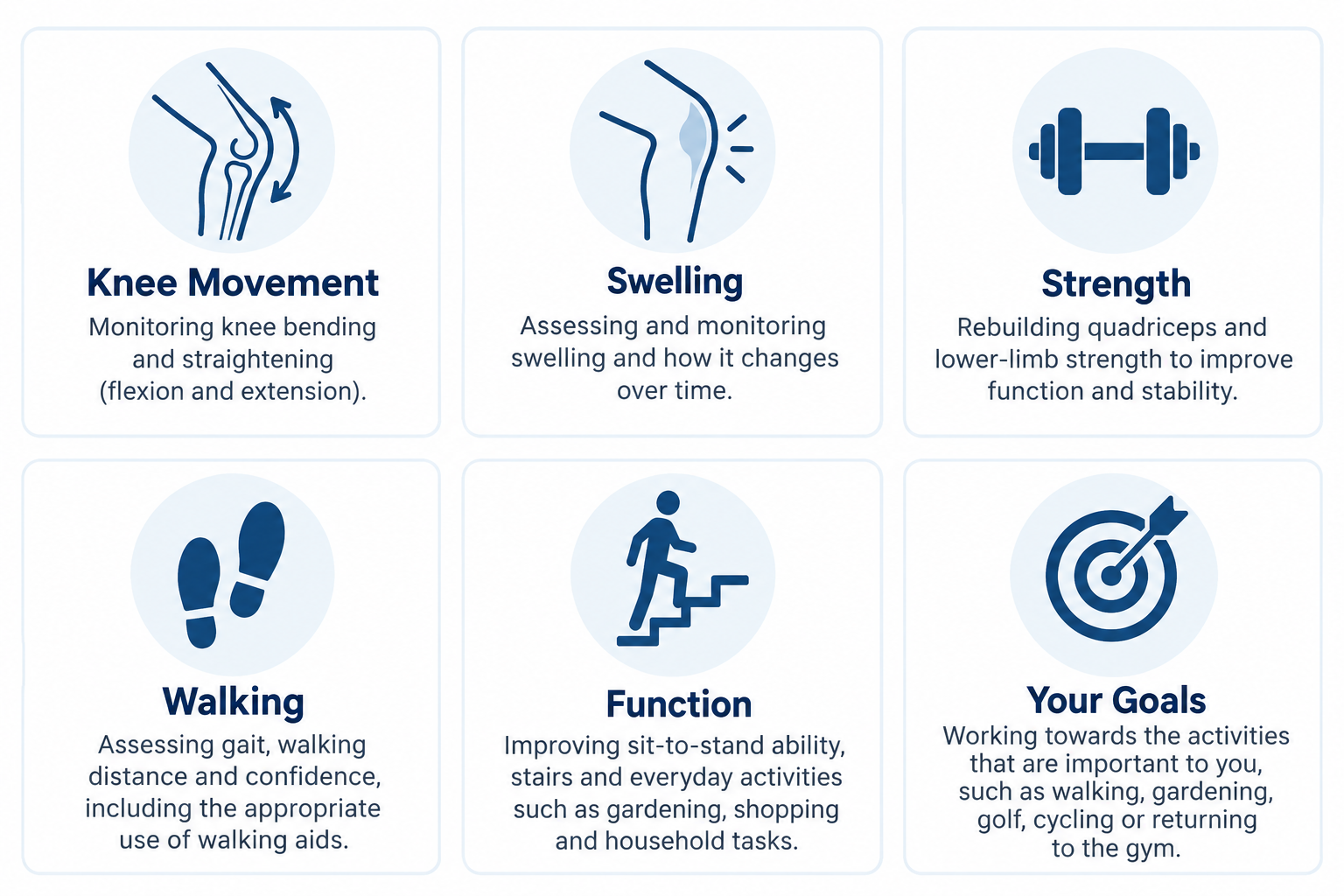
What we measure
Tracking Your Knee Replacement Recovery
Recovery isn't judged by one measurement alone. We monitor several aspects of your progress.
Frequently Asked Questions About Total Knee Replacement
1. How long does it take to recover from a total knee replacement?
Most people make significant improvements during the first 6–12 weeks following knee replacement surgery. However, full recovery can take 6–12 months, and some improvements continue beyond this.
Recovery varies depending on your age, strength before surgery, general health and rehabilitation progress.
At Bacchus Marsh Physiotherapy, we help patients through each stage of recovery, from managing early swelling and stiffness to rebuilding strength and returning to everyday activities.
2. How much pain is normal after knee replacement surgery?
Pain and discomfort are expected following a total knee replacement, particularly during the first few weeks.
Pain generally improves gradually, although it is common to experience some discomfort when bending the knee, walking or completing strengthening exercises.
Some patients continue to experience aching, stiffness or discomfort at night for several months.
Your physiotherapist can help you understand what is expected during recovery and how to manage exercise without unnecessarily aggravating your knee.
3. Why is my knee still swollen after knee replacement?
Swelling is one of the most common concerns following knee replacement surgery.
It is normal for the knee to remain swollen for several weeks or months. Some patients experience intermittent swelling for 6–12 months, particularly after increased activity.
Swelling occurs because surgery causes inflammation and tissue healing, and the knee's ability to manage fluid takes time to recover.
Managing swelling may involve elevation, cold therapy, appropriate walking distances, ankle movements and gradually increasing exercise.
However, sudden or worsening swelling, particularly with calf pain, redness, fever or increasing warmth, requires prompt medical assessment.
4. How much should my knee bend after a knee replacement?
Knee bending, also called flexion, is an important part of rehabilitation.
As a general guide:
First 2 weeks: Work towards approximately 90° of knee bending. However sometimes this takes longer don’t panic.
Weeks 2–6: Progress towards approximately 100–110°.
Weeks 6–12: Many patients achieve approximately 110–120°, depending on their circumstances.
These are general rehabilitation goals, not strict deadlines.
Achieving full knee straightening (extension) is also particularly important for comfortable walking.
At Bacchus Marsh Physiotherapy, we assess your knee movement and provide exercises suited to your recovery stage.
5. When can I walk normally after knee replacement?
Most patients begin walking with assistance shortly after surgery.
Walking aids such as a frame or crutches are gradually reduced as strength, balance and walking confidence improve.
Many patients walk independently within 3–6 weeks, although some take longer.
Walking without a limp is more important than simply walking without a stick or crutch.
6. How often should I do physiotherapy exercises after knee replacement?
During early recovery, gentle knee bending and straightening exercises are often performed several times throughout the day.
Strengthening exercises may initially be completed every day at a manageable intensity, with more demanding strengthening sessions spaced to allow recovery as rehabilitation progresses.
The amount of exercise should be adjusted according to pain, swelling, fatigue and knee function.
More exercise is not always better. Excessive exercise that significantly increases swelling can make recovery more difficult.
7. When can I drive after a total knee replacement?
Many patients return to driving approximately 4–6 weeks after surgery, although this varies.
Before driving, you should be able to:
Safely enter and exit the vehicle.
Bend your knee sufficiently to operate the pedals.
Perform an emergency stop without hesitation.
Drive without impairment from pain medication.
Recovery following right knee replacement may affect driving differently from left knee replacement.
Always follow your surgeon's advice and check relevant licensing and insurance requirements before returning to driving.
8. Why is my knee stiff in the morning or after sitting?
Stiffness is common following knee replacement surgery.
The knee may feel particularly stiff first thing in the morning or after sitting for an extended period.
This can occur because of residual swelling, healing tissues and reduced movement.
Gentle knee bending, straightening and short periods of walking often help improve stiffness.
Persistent or worsening restriction in knee movement should be assessed by your physiotherapist or surgeon.
9. When can I return to gardening, golf or other activities?
Returning to recreational activities depends on strength, balance, knee movement and confidence.
Many patients gradually return to activities such as gardening, longer walks and light recreational exercise during the first 2–3 months.
Golf may be possible around 3 months for some patients, while more demanding activities can take longer.
Activities involving kneeling, twisting or prolonged standing may initially be uncomfortable.
Your physiotherapist can help you prepare for the specific activities you want to return to.
10. Is it normal for my knee to feel warm months after surgery?
Yes. Mild warmth around the operated knee can persist for several months after surgery.
This is often associated with increased blood flow and ongoing tissue healing.
However, increasing warmth accompanied by redness, worsening pain, wound discharge or fever may indicate infection and requires urgent medical assessment.
11. What happens if my knee is not bending enough after surgery?
Some patients experience difficulty regaining knee movement because of swelling, pain, muscle guarding or scar tissue formation.
Early identification of restricted movement is important.
Physiotherapy may involve specific range-of-motion exercises, swelling management, progressive strengthening and strategies to improve movement.
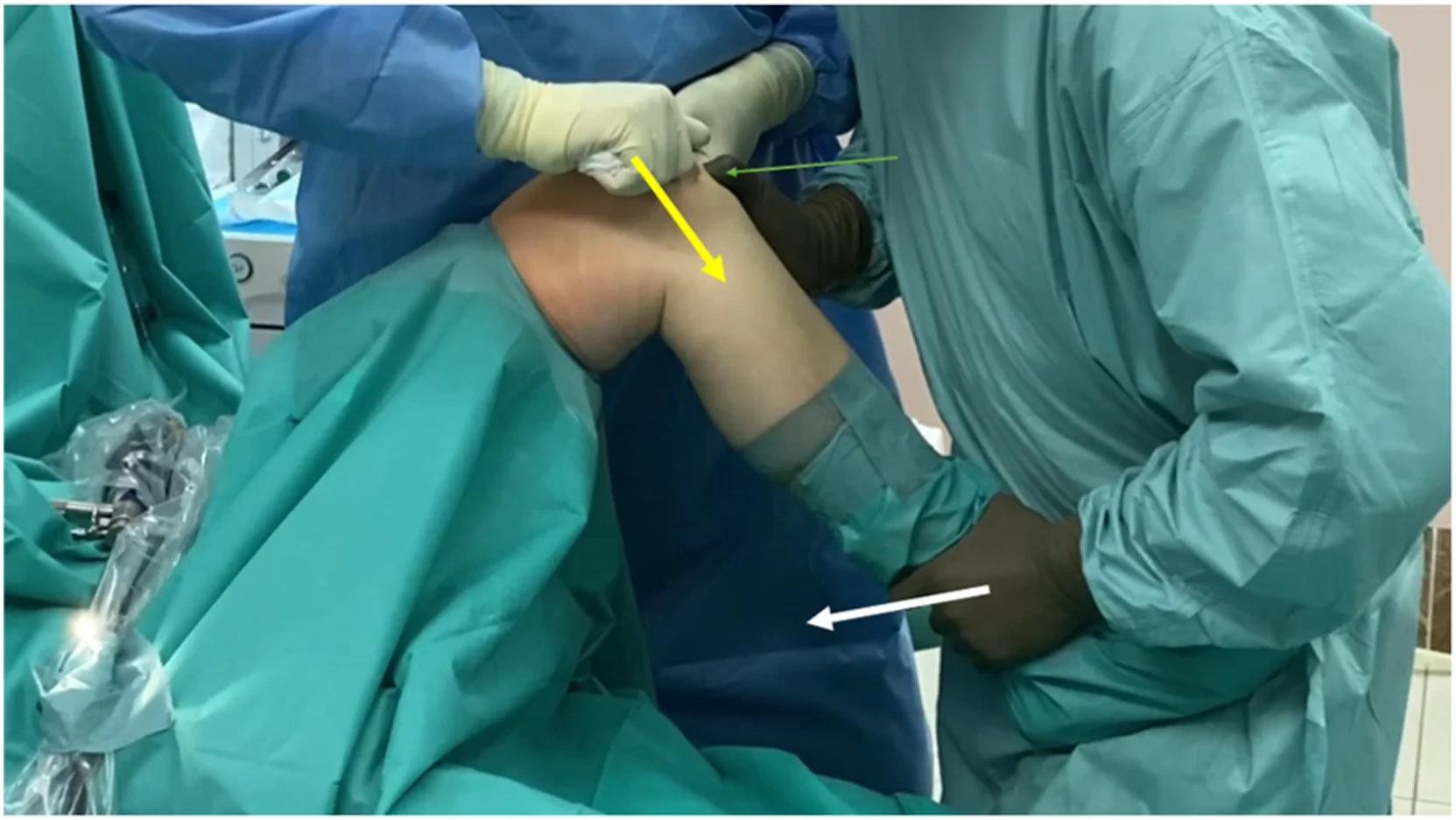
In some cases, the surgeon may consider manipulation under anaesthesia (MUA) when knee stiffness remains significant despite rehabilitation.
Not every stiff knee requires manipulation, and the decision depends on the individual patient's progress and clinical circumstances.
12. Do I need physiotherapy after a total knee replacement?
Physiotherapy can play an important role in helping patients regain knee movement, strength, balance and confidence after surgery.
Although many patients receive exercises in hospital, rehabilitation often needs to progress beyond the initial exercises as the knee recovers.
At Bacchus Marsh Physiotherapy, we provide individualised knee replacement rehabilitation, including:
Knee bending and straightening exercises.
Pain and swelling management.
Quadriceps and hip strengthening.
Walking and stair retraining.
Balance and functional exercises.
Return to recreational activities and everyday life.
Our goal is not simply to help your knee recover from surgery, but to help you return to the activities that matter to you.
Preparing for or Recovering From Knee Replacement?
Whether your surgery is approaching, you've recently left hospital or your recovery isn't progressing as you expected, we can assess your knee and develop an individual rehabilitation plan.
BOOK A KNEE REPLACEMENT PHYSIOTHERAPY APPOINTMENT
Bacchus Marsh Physiotherapy
25 Grant st Bacchus Marsh
ph: 53674383
Knee Replacement Recovery Advice